A heavy machinery assembly line does not stop because of a big failure. It stops because a small bin is empty. A bolt, a seal, a bracket — something worth Rs. 500 holds up a machine worth 50 lakhs.
That is the real cost of traditional material handling. You have stock in your main store, but it is not at the bay when the fitter needs it. Someone is searching, calling, waiting for a forklift. The line waits.
A line-feed system fixes that by reversing the flow. Instead of the line coming to the store, the store comes to the line, exactly when needed.
The cost of a line waiting for parts
In most fabrication and heavy assembly shops, the process is bulk issue. The store issues 100 gears at once, they sit near the line, get mixed, get damaged, or get lost. Fitters spend 20% of their time searching, not assembling.
For heavy engineering, where each machine has a long BOM and variants, bulk issue creates chaos — wrong variant fitted, extra handling of heavy housings, and rework.
What feeding the line actually means
Line-feed, especially Just-In-Time, means material is supplied to the assembly bay in small, sequenced lots, aligned to the production plan for that shift or that machine.
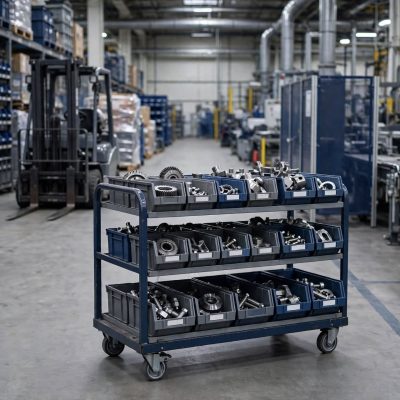
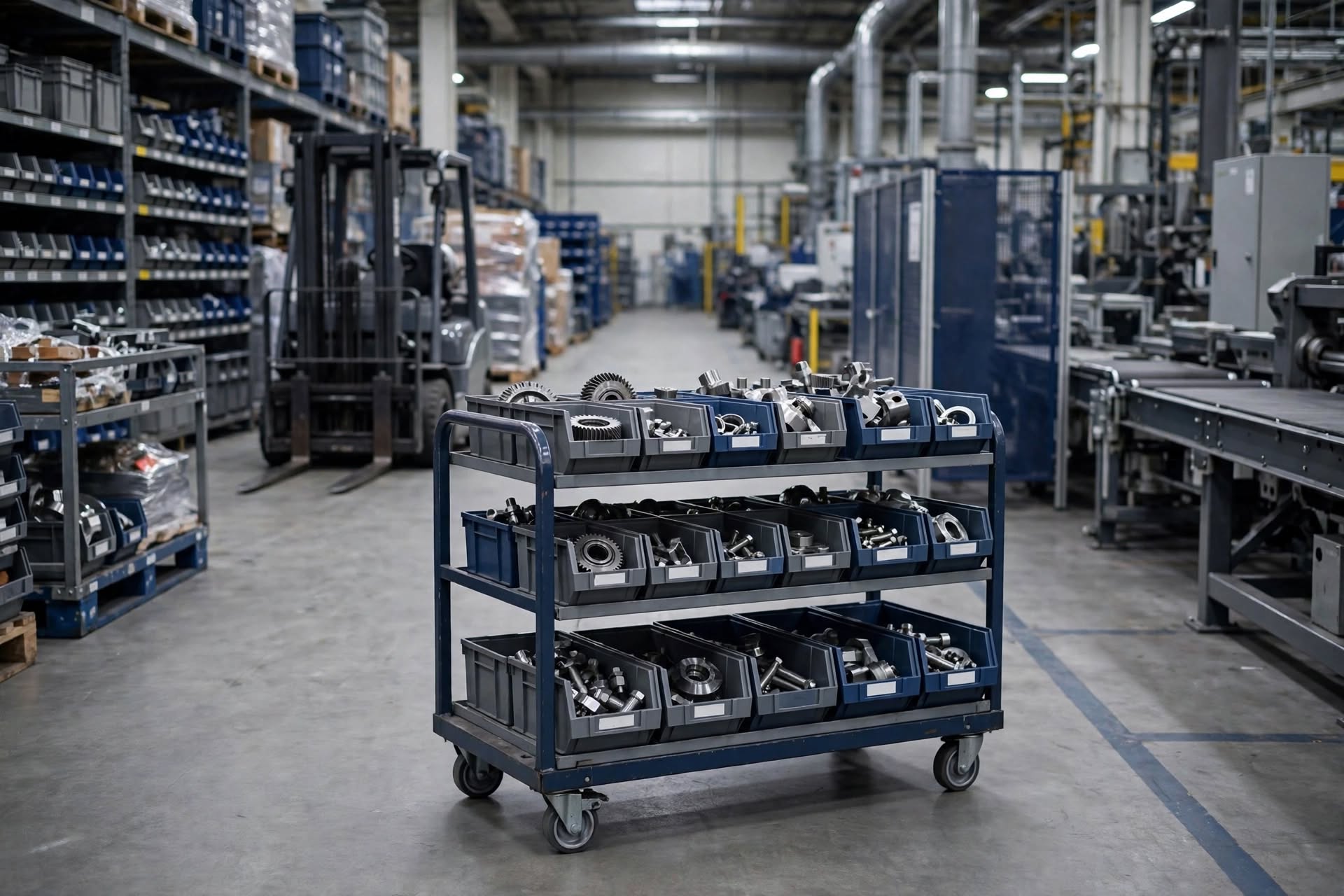
Think of it like this: for Machine No. 124, at Station 3, you need Gear A, Bearing B, and Bolt Kit C in that order. Instead of giving the whole store, we give you a trolley with those three bins, in that sequence, labeled for that machine.
It is not more transport. It is less handling and zero searching.
From warehouse to trolley
This only works if warehousing behind it is disciplined.
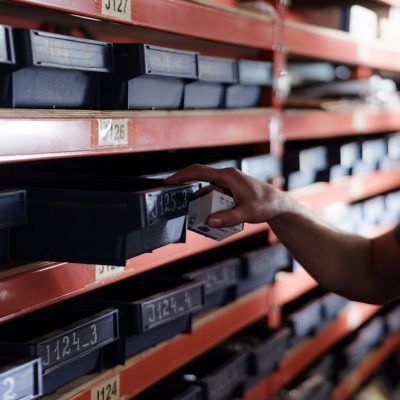
In our setup, your parts — finished goods, spares, raw castings — are held in our in-house or external warehouse near your plant, managed by WMS. Bin locations, FIFO/FEFO, batch traceability, cycle counts for accuracy above 99.5%. Stock is QC-passed as per your drawings, so only good parts enter the flow.
Every morning, we get your shift plan. Our team does:
Kitting per BOM: Pick parts for each machine as per BOM, not bulk.
Sequencing: Arrange bins on the trolley in the order they are needed on the line.
Feeding: Move trolleys via our own fleet or tugger to the bay at the planned time. Empty trolleys return.
You get a simple view on your dashboard — what trolley is ready, what is in transit, what is at the bay. No public tracking link, just practical visibility.
Why kitting changes everything
This is part of our value-added services, but it is core to line-feed.
When a fitter gets a sequenced kit, he does not open 10 boxes. He picks from Bin 1, then Bin 2. For heavy components like gearbox housings or large castings, we pre-stage them on a heavier trolley with proper support, so there is no double handling by crane.
Result: handling time drops, variant errors drop, and your store team stops being a firefighting team. For one fabrication client, assembly time per station dropped by 18% after switching from bulk to kitted feed.
What you get when it works
When line-feed works, you see three changes immediately:
First, the line never waits for small parts. Because replenishment is based on consumption, not guesswork.
Second, your shop floor looks clean. No piles of spares near bays. Only what is needed for that shift.
Third, accountability becomes clear. If a trolley is late, you know. If a bin is short, you know. It is not lost in the store.
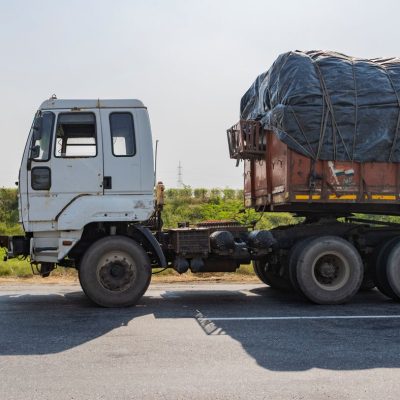
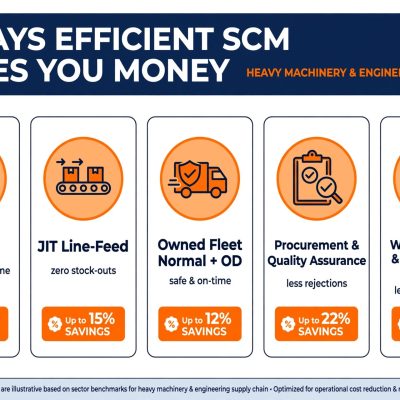
This system connects to VMI naturally. When line-feed consumes, VMI triggers replenishment from vendors, so stock near your plant never goes below minimum. And when combined with our owned fleet for normal and OD, even heavy housings arrive JIT, not just small bolts.
Line stoppage is expensive. Feeding the line on time is cheaper than holding extra stock to cover chaos.
If your assembly has seen a stoppage in the last month because a part was in the store but not at the bay, it is time to look at how your store feeds the line. Share your shift plan and top 5 line-stoppage reasons — we will map a trolley flow for one bay as a pilot.