If you run a heavy machinery plant, you know the feeling. A critical gear, a hydraulic housing, or a long-lead casting is missing. The assembly line waits. A whole shift is lost, not because you didn’t plan, but because the part was stuck with a vendor, in transit, or failed quality check.
Traditional purchasing puts all the pressure on your team — follow up with 15 vendors, track deliveries, hold buffer stock that blocks working capital, and still face stock-outs.
Vendor Managed Inventory flips that responsibility.
The real problem on the shop floor
Heavy machinery is not FMCG. Parts are heavy, expensive, often custom-made to your drawings, and have lead times of weeks. You cannot order them overnight. If you stock too much, cash is locked in racks. If you stock too little, the line stops. Add multi-vendor coordination, drawing mismatches, and OD transport delays, and your SCM team spends more time firefighting than planning.
So what does this model actually mean?
In simple terms, your supplier partner takes ownership of monitoring and replenishing stock for you. Instead of you raising a PO every time stock dips, we track your actual consumption at your plant or at our warehouse near your plant.
We hold the inventory — in our in-house or external warehouse managed by WMS — and you consume as needed. You pay only for what you use. The stock is yours in terms of availability, but the headache of managing it is ours.
It is not just storage. It is procurement, quality check, and availability combined.
How it works day to day
It is a closed loop, designed for heavy components:
- We map your consumption: What parts, what monthly volume, what is critical vs. regular? We set min-max levels with you.
- We procure and check: Vendor identification, negotiation, consolidation. Every inward is checked against your engineering drawings, not just quantity. Rejections are handled at our end.
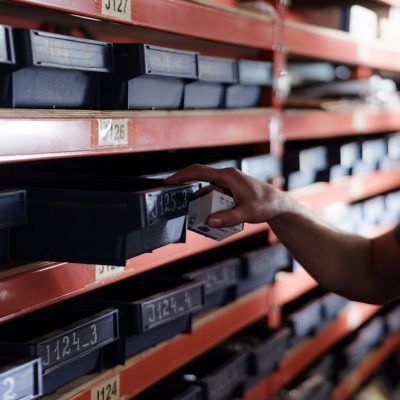
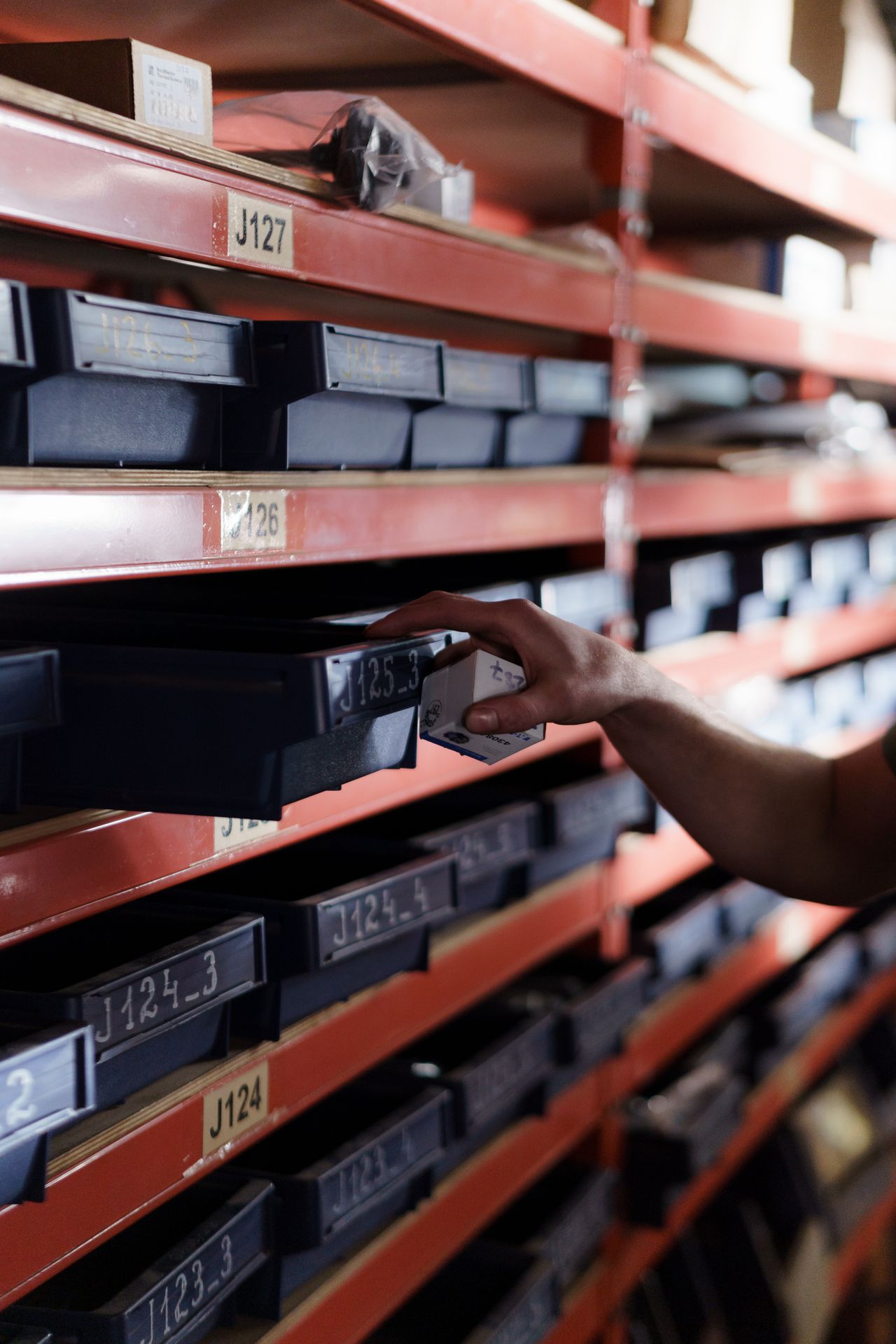
- We hold near your plant: Stock is kept in our warehouse close to your assembly unit — finished goods, spares, raw castings, all binned and traceable with batch and serial numbers. Cycle counts ensure accuracy above 99.5%.
- We replenish automatically: When consumption crosses the minimum, our team triggers replenishment from vendors. You see stock levels on a simple dashboard.
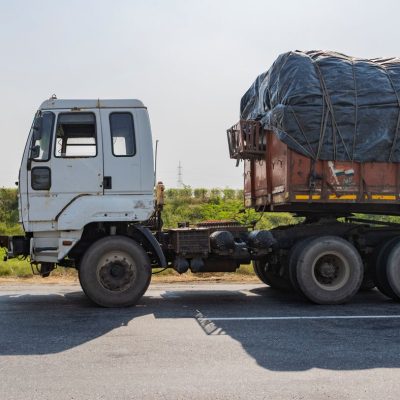
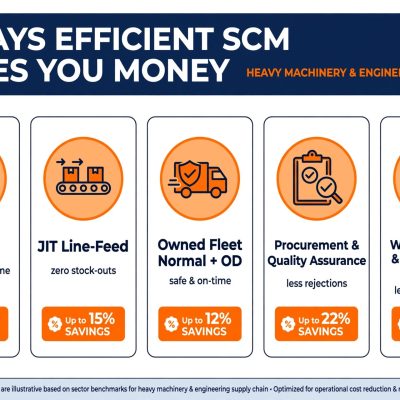
- We feed the line: When you need it, material moves via our owned fleet — normal trucks for regular spares, OD trailers with proper lashing, route survey and permits for heavy loads — as JIT kits sequenced per your BOM.
You get GPS visibility through our integrated provider, but the core value is not tracking. It is assurance.
What changes for your team
First, working capital. You move from buying and holding to pay-as-you-consume. For one earthmoving OEM we work with, blocked capital dropped by about 20% in four months.
Second, zero firefighting. Your procurement team stops chasing vendors. Our team does.
Third, quality at source. Only QC-passed material enters your line. No last-minute surprises.
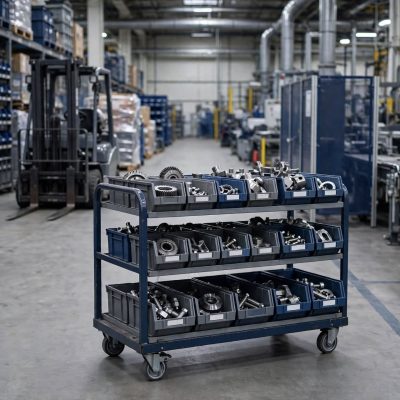
Fourth, space and handling. Because kitting and sequencing happen at our warehouse, your store sends ready trolleys to the bay. Less searching, less handling time on the floor.
Who should consider it?
If you have 10+ vendors for heavy spares, if your lead times are more than two weeks, if you have had a line stoppage in the last six months due to a missing part, or if your store is full but the required part is still not available — this model is built for you.
It works especially well for long-lead castings, gearbox assemblies, hydraulic components, and high-value spares that you cannot afford to stock out but also cannot overstock.
Common doubts we hear
Who owns the stock? We hold it for you near your plant. Ownership transfer happens on consumption, as per your commercial agreement. You get availability without blocking cash upfront.
What if my consumption fluctuates? That is why min-max is dynamic. We review it monthly based on your production plan.
What about quality? Every batch is checked as per your drawing and QC checklist before binning. Rejected lots never reach your plant.
In heavy machinery, the cheapest inventory is not the one you buy at the lowest price. It is the one that is available at your assembly bay when you need it, QC-passed, without locking your cash.
That is what this approach gives you — your line keeps moving, your team focuses on building machines, not chasing parts.
Want to see if it fits your plant? A quick stock and consumption audit of your top 20 critical spares will tell us.